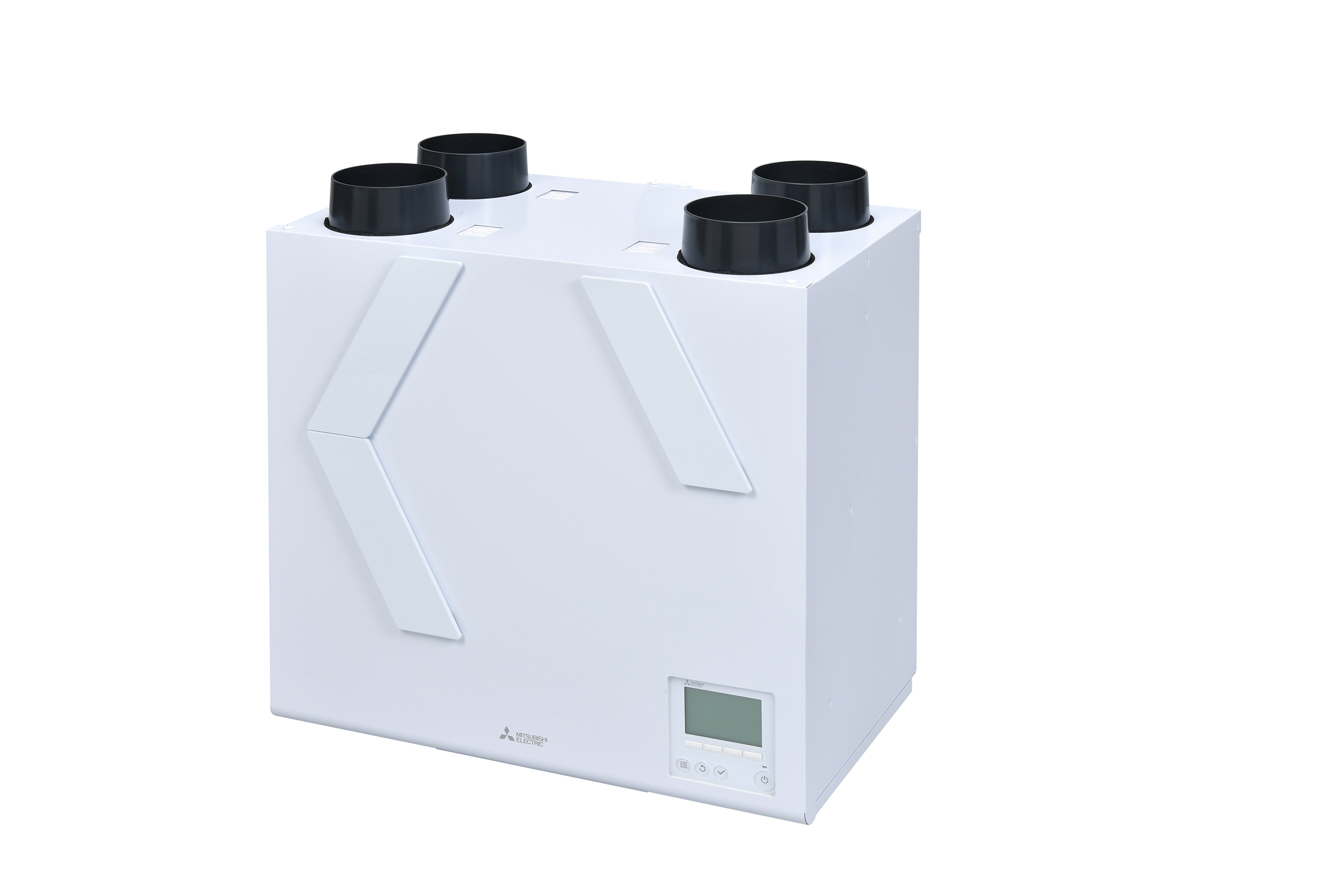
Fresh air, lower bills, and lasting comfort. all powered by smart MVHR systems.

Expert MVHR installation across Kent and the South East
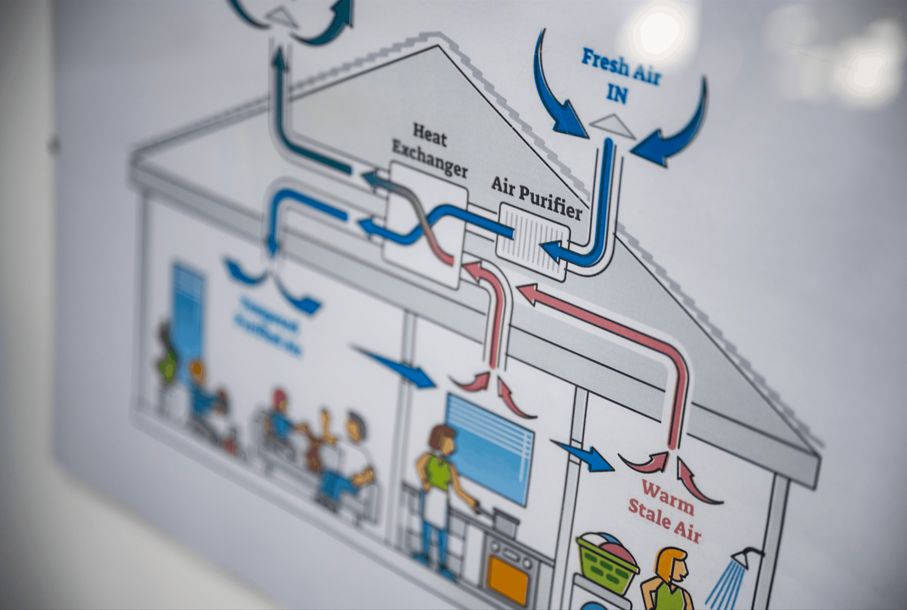
HOW MVHR WORKS
Create a fresher, healthier home with an MVHR system designed around your space, expertly installed and commissioned by SGS Energy.

Whole-house MVHR designed to reduce wasted heat and improve indoor air quality

SGS Energy designs and installs MVHR systems that continuously remove stale, humid air while bringing fresh, filtered air into your property.
We plan the duct routes, supply the unit, install the system and commission the airflow so your ventilation works quietly and efficiently from day one.

Get a FREE quote
Get Started
MVHR installations
for
healthier homes
Whole-House Ventilation
Continuous fresh air

Remove stale, humid air from kitchens, bathrooms and living spaces while supplying fresh, filtered air throughout your property.

Heat Recovery Units
High heat recovery performance

Modern MVHR units can recover a high proportion of heat from outgoing air, helping reduce unnecessary heat loss when correctly designed and commissioned.
Duct Design & Installation
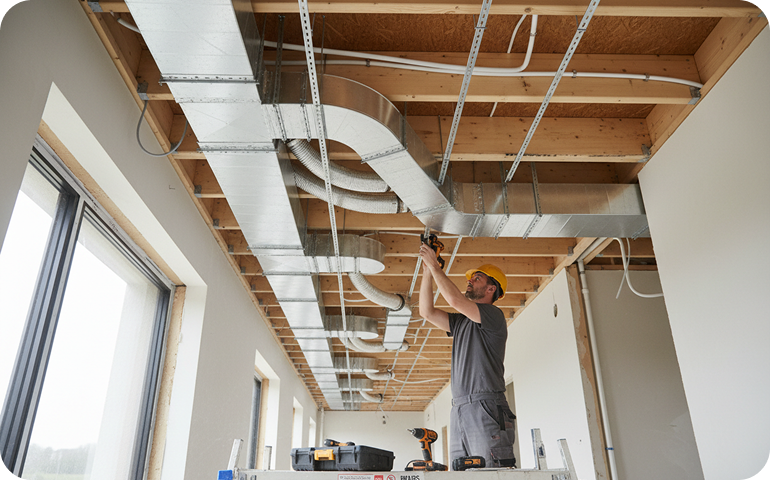
Neat, discreet ductwork

Our team plans duct routes, vents and access points carefully so your system performs efficiently without disrupting the look of your home or workspace.

Duct Design & Installation
Neat, discreet ductwork

Our team plans duct routes, vents and access points carefully so your system performs efficiently without disrupting the look of your home or workspace.

SGS Energy’s MVHR installation process

We manage the entire MVHR project,including design, installation and ongoing servicing, giving you one experienced team throughout.

1. Survey & design

Our engineers assess your property and create a detailed plan for MVHR ducting, MVHR vents, and airflows.
Workshops
Ideation
Brainstorming

2. System supply & preparation

We’ll carry out a site visit to assess the property and plan the installation. Once everything is confirmed, we’ll provide the full MVHR kit, including the unit, ductwork, filters and smart controls.
Mindfulness
Self-Reflection
Emotional Resilience

3. Professional MVHR installation

Certified MVHR installers fit your MVHR system neatly and safely, ensuring it meets all regulations.
Brand Identity
Storytelling
Optimization

4. Testing, commissioning & servicing

Before handover, we balance and test the airflow, explain maintenance, and offer ongoing MVHR service options.
Financial Coaching
Abundance Mindset
Behavioral Finance
Power your heat pump with more of your own energy
SOLAR & BATTERY SPECIALISTS

One renewable energy system, working better together

Pair your air source heat pump with solar panels and battery storage to create a more efficient, joined-up home energy system.

Solar PV
Smart energy controls
Battery storage
EV charging
LETTER FROM THE INSTALLATION TEAM
A well-designed MVHR system is about more than the unit. Duct routes, airflows, access points and commissioning all need to be planned from the start, so your system performs quietly and efficiently for years to come.
Get Started
Get Started
The Technology Behind the tepeo ZEB Boiler

What is the tepeo ZEB and how does it work?

Charges when energy is cheaper

The tepeo ZEB uses electricity during lower-cost, lower-carbon periods, typically overnight, to heat its internal thermal store.

Stores heat for when you need it

Its 40 kWh thermal battery holds enough energy to provide heating and hot water throughout the day.

Delivers heat through your existing system

With a 15 kW output, the ZEB supplies radiators, underfloor heating and a standard hot-water cylinder, just like a conventional boiler but with no emissions in the home.

Tepeo ZEB benefits

Zero emissions at home

No combustion

The tepeo ZEB uses electricity to heat your home, producing no fumes or carbon emissions on site.
Cleaner energy

Smart charging

The tepeo ZEB charges when electricity is typically cheaper and more renewable energy is available on the grid.
Easy to install and control

Works with your home

The tepeo ZEB connects to existing radiators or underfloor heating and can usually be installed within 1–2 days, without replacing your entire heating system.Use the tepeo app to monitor performance, adjust charging times,  and quickly boost the heating.
The Technology Behind the SUNAMP

What is the Sunamp and how does it work?

Charges using available energy

The Sunamp stores heat from your home’s energy system, such as electricity, an air source heat pump, boiler or solar panels.

Stores heat in a compact battery

Its phase-change material stores a large amount of thermal energy in a unit that can be up to four times smaller than an equivalent hot water cylinder.

Delivers hot water when needed

When a tap or shower is turned on, the stored heat is released to provide instant, high-flow, mains-pressure hot water.

Sunamp benefits

Compact hot-water storage

Up to 4× smaller

The Sunamp stores hot water energy in a unit significantly smaller than a traditional hot-water cylinder.
Hot water on demand

Fast, high-flow hot water

Stored heat is released when needed to provide reliable, mains-pressure hot water.
Flexible and easy to live with

Works with your energy system

The  SunampThermino can store heat from electricity, boilers, air source heat pumps or solar panels, depending on the model and installation.
FUNDING & SUPPORT.

Help with the cost of switching to a tepeo ZEB.

We’ll help you understand the support currently available, check your eligibility and explain what may change as government funding for heat batteries develops.

£2,500TEPEO GRANT MATCH
PLANNEDGOVERNMENT SUPPORT FOR HEAT BATTERIES
NO-OBLIGATIONINITIAL CONVERSATION

Boiler Upgrade Scheme

Popular

The government plans to introduce a £2,500 grant for eligible heat batteries from winter 2026, subject to the final scheme details and standards being confirmed.

tepeo Grant Match

AVAILABLE NOW

OZEV-approved home charger installations funded through the EVHS grant. We manage the application, source approved installers, and ensure your equipment qualifies for the full £350 allowance.

Two smart ways to store heat.

Choose the solution that fits your home.

tepeo ZEB
Whole-home heating and hot water

The ZEB is a quiet, low-maintenance alternative to gas, oil or LPG heating, designed to provide both heating and hot water through your existing radiators or underfloor system.It could be a great fit for homes using around 12,000 kWh of gas a year, with space for a small floor-mounted unit.

Sunamp Thermino
Hot water, without the bulky cylinder

The Thermino is a compact, low-maintenance alternative to a traditional hot-water cylinder, designed to deliver fast, high-flow hot water while taking up far less space.It could be a great fit for homes looking to free up valuable cupboard or utility-room space without compromising on hot-water performance.

Not sure which path fits? Most teams don’t know at first — and that’s fine. You can start self-serve and switch later, or talk with us before committing. The system is designed to adapt either way.

Frequently asked questions

How much bigger do heat pump radiators need to be​?

Air source heat pump radiators are often larger than those used with a traditional boiler because heat pumps typically operate at lower water temperatures.

The exact size required will depend on factors such as your home’s heat loss, insulation and the system’s flow temperature. In many cases, existing radiators may still be suitable, although some may need to be replaced with larger or higher-output models.

A qualified installer will calculate the heating requirements for each room and recommend the right radiator sizes to keep your home comfortable while helping the heat pump run efficiently.

Is my house suitable for a heat pump?

Most homes can be suitable for an air source heat pump, including older properties, but the system needs to be correctly designed for the building.

An air source heat pump works best in a well-insulated home with appropriately sized radiators or underfloor heating. You'll also need a suitable outdoor location for the unit, with enough space around it for airflow and maintenance access.

Before installation, a qualified installer should assess your home’s insulation, heat loss, existing heating system and electrical supply. They can then confirm whether a heat pump is suitable and recommend any improvements that may help it run efficiently.

Do you need planning permission for solar panels​?

In most cases, you don't need planning permission for solar panels on a domestic roof. In England, roof-mounted solar panels are usually classed as permitted development, which means you can install them without making a full planning application, as long as the system meets certain rules.

For pitched roofs, solar panels should not sit above the highest part of the roof, excluding the chimney, and should not project more than 200mm from the roof slope or wall. For flat roofs, the solar PV equipment must not be more than 600mm higher than the highest part of the roof.

You may need planning permission or prior approval if your property is:

  • Listed
  • Within the grounds of a listed building
  • On a scheduled monument
  • In a conservation area
  • In a World Heritage Site

You may also need permission if the panels will be installed on a wall that faces a road.

Ground-mounted solar panels have their own rules too. These can cover the height, size, location, and number of panels allowed.

If in doubt, contact your local council.

How long do solar panels last​?

Most solar panels last around 25 to 30 years, although they can often continue generating electricity after that. Their output gradually reduces over time, so older panels may produce less power than they did when they were first installed.

Many solar panels come with long performance warranties, often around 25 years, although this varies by manufacturer. A good installation, regular checks, and keeping the panels clear of heavy dirt or debris can help them work well for longer.

In simple terms, solar panels are a long-term investment. They should keep producing electricity for decades, but their efficiency will slowly decline over their lifespan.

SGS ENERGY
Ready to plan your renewable energy upgrade?